AlgeriaAfrica

Give the couscous the first spoonful

Explore Algeria through vegetable couscous: tender roots, chickpeas and fragrant broth over separate grains, with an explicitly practical instant-couscous method.

At the table: Revolution Day anniversary week

Jump to recipe
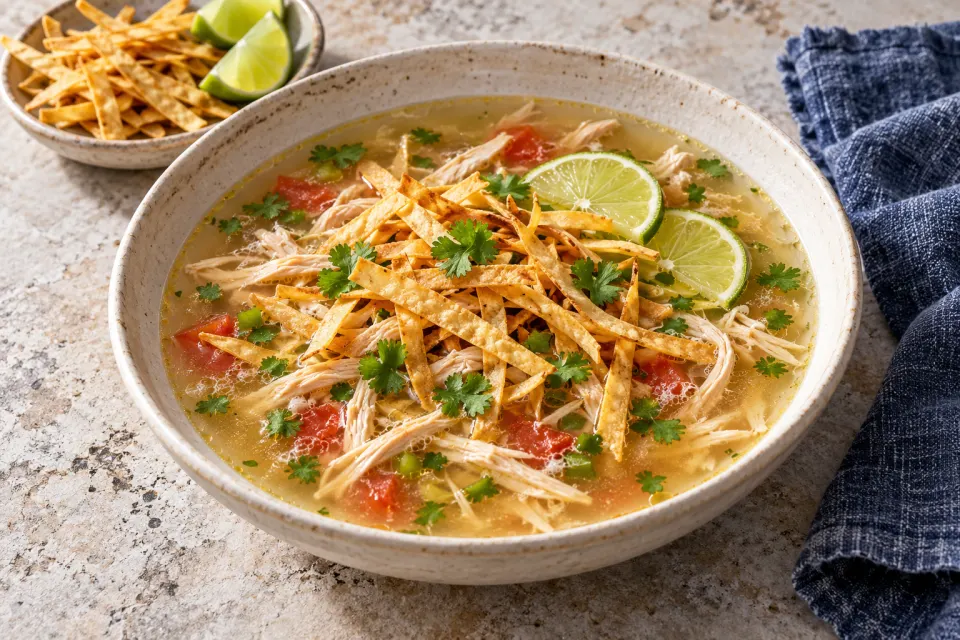
Fine golden couscous topped with carrots, turnips, potatoes, zucchini and chickpeas on a shallow ivory platter, with vegetable broth alongside.
Algerian vegetable couscous

Begin with the grain

The first spoonful does not have to come from the tallest carrot. Take it from the couscous underneath, where a little broth has reached the grains without burying them. The vegetables have their own shapes and cooking times; the grain has another task. It receives what the pot has made, then carries it to the spoon. A good serving gives both parts some room.

That is the idea behind this vegetable couscous: keep a loose bed below, arrange the cooked pieces above, and send more broth to the table separately. It is an invitation to notice the base of a dish that can otherwise disappear beneath its toppings. There is no need for a mountain of garnish. The contrast between grain, vegetables and liquid is already enough to work with.

Why Algeria this week

Algeria is our country for the week of November 1–7, 2026. November 1 marked the 72nd anniversary of the beginning of the national liberation war, an occasion confirmed in Algérie Presse Service’s report of the official holiday announcement. The commemoration gives us a reason to turn towards Algeria’s table this week. It does not establish a special November 1 menu.

Our subject is therefore vegetable couscous as part of a broader culinary tradition, rather than a claim that this particular combination belongs to the anniversary. The distinction matters. A calendar can open a door into a country’s food without deciding in advance what every household must put on its plates.

A shared inheritance

Couscous also asks for a wider frame than one border. In December 2020, UNESCO announced the inscription of the knowledge and practices surrounding its preparation and consumption through a joint application by Algeria, Mauritania, Morocco and Tunisia. The recognition concerns living skills and social practices, not a single approved ingredient list.

That helps explain why variation is something to learn from rather than tidy away. A recipe can be recognizably Algerian while belonging to a larger shared food culture. Calling this an Algerian exploration should sharpen our attention to its sources; it should not erase the other countries that share the tradition or settle an origin argument that this article has not researched.

The work inside a grain

The Algerian recipes consulted here make the grain an active part of the cooking. Djouza describes repeated steaming and separating the couscous. A recipe published with the cooperation of the Algerian Embassy in Tokyo likewise moistens, loosens and steams it in stages. Those are instructions worth noticing even when the equipment in a reader’s kitchen is different.

This version takes a declared shortcut. Instant couscous has already been prepared for a different kind of finish: hot water and a covered rest, following its packet. It saves time, but it should not be mistaken for raw semolina, pearl couscous or grain that needs repeated steaming. Read the package before heating the pot. The word couscous alone does not tell you which method the product needs.

A vegetable pot with its own reasons

The vegetable-only recipe on Amour de Cuisine is particularly useful here. It treats vegetables and their cooking liquid as sufficient, with meat offered as an option. Our pot follows that possibility, using carrots, turnips, potatoes, zucchini and already-cooked chickpeas. Tomato, onion and a measured amount of spice supply the broth around them.

The important choice is when each piece goes in. Roots can tolerate a longer simmer; zucchini needs a shorter stay if it is to reach the table intact. Cut the pieces large enough to lift out, then check tenderness instead of treating the timer as a promise. If one vegetable finishes early, taking it out briefly is more useful than asking it to survive while the others catch up.

A shortcut with its name attached

Health Canada’s family-style vegetable couscous supplies a useful practical comparison: simmer the firmer vegetables first, add zucchini later, and prepare quick-hydrated grain separately. That source supports the convenience method, not a claim to define Algerian cookery. The distinction leaves room for an accessible meal and for the more involved techniques behind it.

Commercially canned chickpeas make the timing predictable. Dried chickpeas cannot simply take their place in this short recipe. Likewise, ras el hanout is a blend whose ingredients differ between products; start with the measured amount and read the label. The aim is a seasoned vegetable broth with enough clarity to taste the separate parts, not a contest to fit every spice in the cupboard into one pan.

Bring the broth with you

Arrange the vegetables so that someone serving can take a piece of each without digging through the whole platter. Add a modest first ladle of broth, then let the rest travel alongside. Some diners will want a more thoroughly moistened spoonful; others will keep more of the grain distinct. A separate jug makes that small decision easy.

The platter is a starting arrangement, not a finished decision for every diner. Pass it with a ladle and leave space for another helping. By the second spoonful, a little more broth may be welcome. The couscous underneath is still worth noticing.

This is a newly researched recipe, separate from the historical cooking archive.
Bring it to your table

Algerian vegetable couscous

Researched adaptation · Not yet kitchen-tested by bluedotoffood

Serves
4
Prep
20 min
Cook
45 min
Total
65 min

About 65 minutes with instant couscous and commercially canned chickpeas. Grain hydration runs during the final vegetable simmer; unusually firm roots may need longer.

Equipment: Large heavy saucepan with lid, knife and board, kettle, measuring jug, heatproof bowl with a close-fitting plate, fork, slotted spoon and serving ladle.

Ingredients

Check off as you go.

Method

  1. Prepare all the vegetables as listed and drain the chickpeas. Keep the carrots and turnips separate from the potatoes and zucchini so they can join the pot at different times. Check the couscous packet for its water quantity and standing time before starting.
  2. Warm 30 ml olive oil in a large heavy saucepan over medium-low heat. Add the onion and cook for 6–8 minutes, stirring, until softened. Stir in the tomato paste, ras el hanout, sweet paprika and black pepper for about 30 seconds; keep the heat gentle so the spices do not scorch.
  3. Add the crushed tomatoes, carrots, turnips, 900 ml water and 1/2 tsp of the salt. Bring to a gentle boil, then partially cover and simmer for 12 minutes. The vegetables should stay mostly beneath the broth; add a little extra water if your pan loses liquid quickly.
  4. Add the potatoes and simmer for 10 minutes. Add the zucchini and chickpeas, then cook for 10–12 minutes more, until a knife slips through the roots and the zucchini is tender but still holds its shape. If the roots need longer, lift the zucchini out with a slotted spoon while they finish, then return it to heat through. Taste the cooked broth and adjust the seasoning.
  5. During the final vegetable simmer, put the dry instant couscous in a heatproof bowl. Toss with the remaining 15 ml olive oil and 1/4 tsp salt. Pour over the freshly boiled water for the couscous, using the packet’s quantity if it differs from 450 ml. Stir once, cover tightly with a plate and leave off the heat for the packet’s standing time, usually about 5 minutes. This step is for instant couscous only.
  6. Uncover the couscous and loosen it thoroughly with a fork, lifting rather than pressing. Check that the grains are tender; if a packet calls for a longer covered rest, follow it. Spoon into a warmed serving dish or four shallow bowls, leaving a low hollow in the centre.
  7. Arrange the cooked vegetables and chickpeas over the couscous with a slotted spoon. Spoon a little hot vegetable broth across the grain, then pass the remaining broth separately so everyone can add more. Serve promptly while the vegetables are hot and the grain is loose; the dish should remain a bed of couscous with its toppings rather than a pot of mixed-in porridge.

A few useful notes

Allergens & dietary notes. Contains wheat and gluten. Check ras el hanout and all packaged ingredients for allergens and cross-contact; blends vary. This recipe does not use a packaged stock cube.

Storage. Cool grain and vegetables promptly in separate shallow containers; refrigerate at 4°C / 40°F or below. Discard cooked food left out for more than 2 hours. Eat within 2–3 days or freeze. Reheat only the portion needed to 74°C / 165°F throughout, checking with a digital food thermometer; bring the vegetable broth to a rolling boil while stirring. Add a splash of water to the grain if needed. Discard uneaten reheated leftovers. See Health Canada below.

About this version. A researched meat-free adaptation informed by Algerian vegetable couscous and other Algerian methods. Instant medium wheat couscous and commercially canned chickpeas shorten the work; this is not the multi-stage steamed-grain method of a couscoussier. The vegetable selection is one practical combination, not a definitive national or November 1 recipe. For non-instant grain, use a dedicated steaming recipe instead of these hydration directions. Not yet kitchen-tested by bluedotoffood.

Sources & further reading

References for the method, context and practical details in this dish.

  1. Couscous aux légumes

    Vegetable-only couscous, canned chickpeas, separately cooked grain and broth at serving. See A vegetable pot with its own reasons.. Accessed 2026-11-03.

  2. Couscous au Poulet et Légumes

    Separate vegetable timing, ras el hanout and twice-steamed grain. See The work inside a grain.. Accessed 2026-11-03.

  3. Authentic Algerian Lunch with the Ambassador

    Algerian embassy chef recipe; two grain steaming passes and separately prepared vegetable/meat sauce. See The work inside a grain.. Accessed 2026-11-03.

  4. Family-style couscous with vegetables

    Practical instant-grain adaptation and later addition of zucchini. See A shortcut with its name attached.. Accessed 2026-11-03.

  5. La journée du dimanche 1er novembre chômée et payée

    November 1, 2026 Revolution Day anniversary and this week’s country selection. See Why Algeria this week.. Accessed 2026-11-03.

  6. UNESCO’s inscription of couscous traditions, an example of international cultural cooperation

    Shared 2020 heritage recognition by Algeria, Mauritania, Morocco and Tunisia; knowledge and variation rather than a single recipe. See A shared inheritance.. Accessed 2026-11-03.

  7. Food safety tips for leftovers

    Prompt shallow-container cooling, refrigeration, two-hour discard rule, two-to-three-day storage and reheating.. Accessed 2026-11-03.