A spoonful that keeps its shape
A good way into this recipe is to watch what happens to a bean. Leave every bean intact and the sauce remains a dressing around separate pieces. Crush a portion and the liquid becomes part of the beans themselves: thicker, less transparent, able to carry the seasoning through the bowl. The difference is small enough to make with the back of a spoon. It is large enough to change the character of dinner.
Lobio invites that kind of attention. The Georgian word means beans, as Georgia About explains, and the name does not promise one fixed texture. This version is a warm, partly mashed stew with ground walnuts, fresh coriander and wine vinegar. It is also an adaptation for already-cooked canned beans. That choice makes the timing practical for a home evening; it should not be mistaken for a record of how every Georgian household cooks.
A dish with room for disagreement
Georgia sits in the South Caucasus, but for this bowl the more revealing geography is regional. Racha, Guria and Imereti appear in accounts of lobio because cooks have different ideas about what belongs with their beans. Following those names gives a curious cook somewhere more specific to begin than a single recipe presented as a portrait of the whole country.
Georgia Travel’s account of lobio describes different regional preparations rather than a single authoritative formula. Some use sour plum juice, some leeks, some walnuts; its Rachan example includes ham. The same overview describes beans with mchadi, Georgian cornbread, and assorted vegetable accompaniments. Those distinctions matter when a recipe travels. A bowl containing beans is not automatically vegetarian, and a walnut version is one branch of the family rather than its definition.
The tourism account also describes kidney-bean cultivation spreading from the western regions of Guria and Samegrelo. A pantry ingredient becomes local through the ways people grow, season and serve it. With lobio, the useful story is that accumulation of choices: a sour element here, another herb there, a different texture when the spoon meets the beans. A precise invention date would tell us less about the bowl than those continuing differences.
One name, several textures
Three recipe references make the range tangible. Georgia About’s walnut lobio keeps the cooked beans whole and combines them with chopped onion and a seasoned nut mixture. No Frills Kitchen cooks the onion and mashes much of the bean mixture. Saveur’s amolesili lobio blends a portion of the beans, then enriches the stew with a walnut purée; that particular recipe also uses chicken stock. Each method gives the nuts, liquid and beans a different relationship.
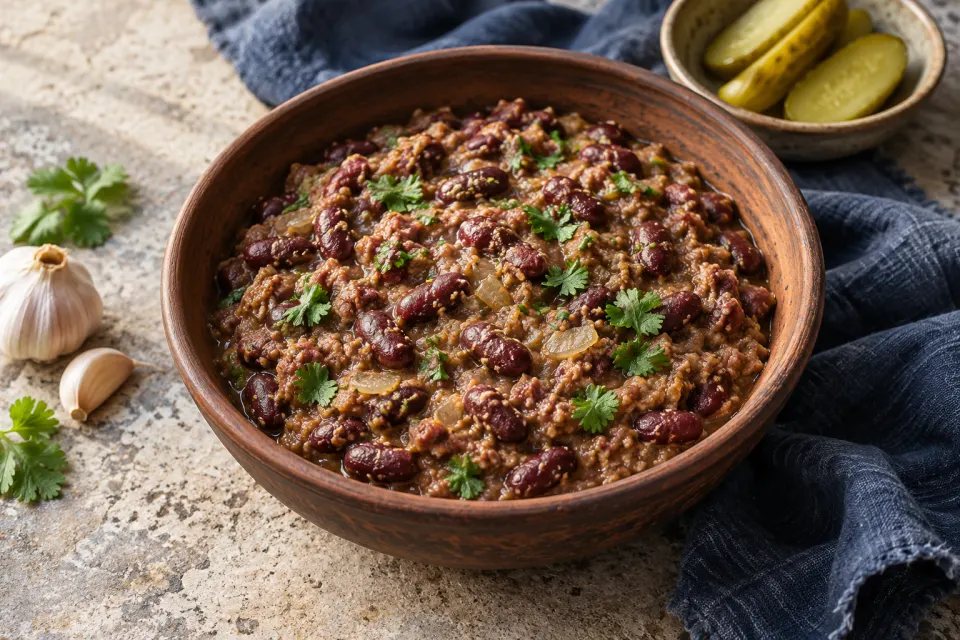
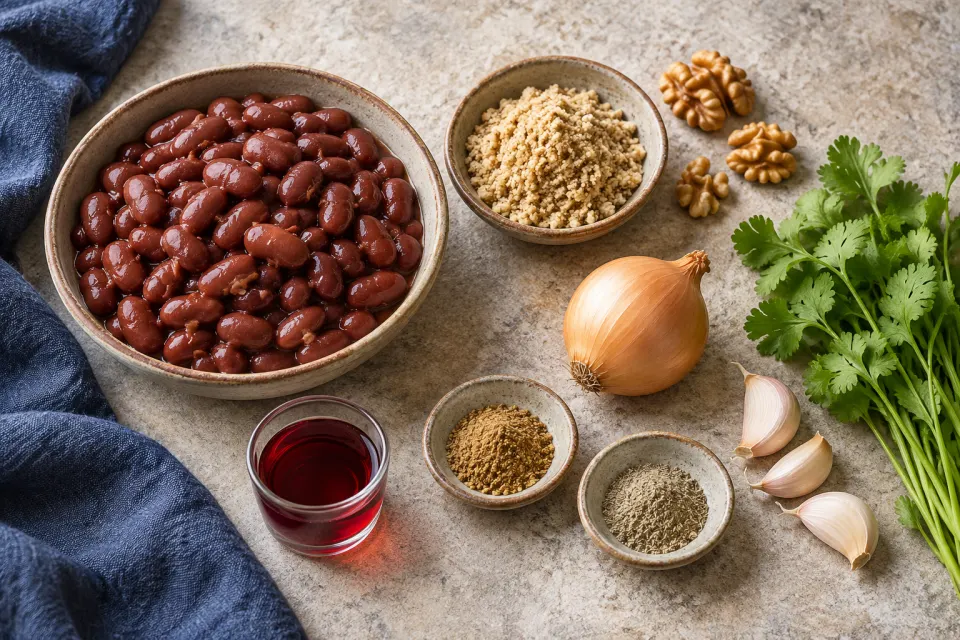
Our recipe takes the warm, partly mashed route. The onion is softened, the walnuts are finely ground, and enough whole beans remain to give each spoonful some definition. Water keeps the base straightforward and plant-based. Because canned beans arrive without a pot of their own cooking broth, mashing is especially useful here. It brings body to the added water without calling for flour or cream.
The seasoning is part of the structure
Ground coriander seed and fresh coriander do separate jobs in this bowl. The seed joins the onion and garlic during cooking; the chopped herb goes in after the heat is switched off. Blue fenugreek is used in the Georgian walnut recipe and in No Frills Kitchen’s version. Seek it out if practical, but do not let an unfamiliar spice name become permission for an unexplained substitution. If you omit it, the recipe notes should say so.
Walnuts need similar care. Grinding them finely allows the pieces to disperse through the liquid. Turning them entirely into nut butter would give a different starting texture. The method below asks for fine crumbs and then a gentle simmer. Stir along the bottom of the saucepan: a thick nut mixture needs more attention than a clear broth.
Vinegar arrives at the finish, where it can be adjusted in small amounts. Begin with the measured spoonful, stir, and taste before adding more. The aim is a deliberate balance between the beans, the nuts and the acidity. Taste a small spoonful after each adjustment, giving the vinegar a moment to disperse before deciding whether the bowl needs more.
Bring the bowl to the table
Serve the stew while it is loose enough to settle into the bowl. If it has tightened while waiting, stir in a little water before serving. Put bread and a small plate of pickled vegetables alongside if you like; mchadi is the Georgian pairing noted in the cultural source. The contrast is useful: something firm to pick up between spoonfuls, something sharp alongside the soft beans.
There is something useful to discuss over dinner here: how much variation can a dish hold before its name stops helping? The sources do not settle that question with one texture or ingredient list. They give us several defensible starting points. Cooking this particular version is an opportunity to notice those choices, then seek out another Georgian cook’s interpretation with a more informed appetite.
If you cook it again, notice the point at which you stop mashing. Leave more beans whole one evening and crush a little more the next. Keep the seasoning decisions small enough to follow. The same pot can become a way of learning what texture contributes to a meal, and why another cook might choose differently.
This is a newly researched recipe, separate from the historical cooking archive.