The bowl is finished at the table
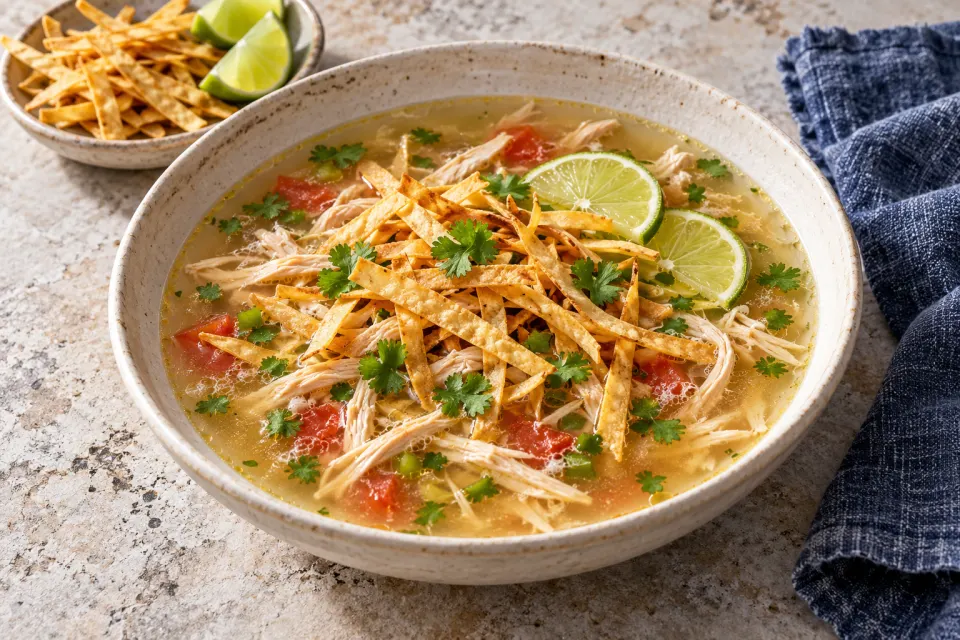
Set a few tortilla strips across a spoonful of hot broth and the first change is almost immediate. Their edges soften where they touch the liquid, while the parts above it keep their brittle shape. Wait and the contrast changes again. Sopa de lima makes that brief interval part of the meal: a soup whose final texture depends on what happens after the saucepan leaves the heat.
The citrus has a similar place in the sequence. This recipe asks you to hold its juice back until the chicken and vegetables are ready, then add it in measured amounts. The bowl begins with stock and ends with a decision. How much brightness does this particular broth need? That is a more useful question than how many limes a name appears to promise.
Yucatán, rather than everywhere
Sopa de lima belongs to the culinary conversation of Yucatán, in southeastern Mexico. The state’s tourism authority describes a light chicken or turkey broth served with fried tortilla strips, tomato, citrus slices and habanero. That regional account is a good starting point for a reader meeting the dish. It is not a reason to make one bowl stand for all Mexican cooking, or to insist that every household must season it alike.
Mexico’s biodiversity commission describes a food tradition with native foundations, including maize and tomatoes, that incorporated ingredients from other parts of the world after the arrival of the Spanish. That broad history does not date an individual soup. It does offer a useful way to read this bowl: regional cooking can retain recognizable ingredients and techniques while making room for new ones. A familiar recipe is a living practice, not a frozen relic.
The fruit behind the name
A Yucatecan lima is not simply the ordinary Persian lime sold in many supermarkets. Pati Jinich distinguishes the local fruit from familiar limes, while Rick Bayless explicitly offers key or Persian limes as alternatives in his recipe. Those instructions make substitution possible; they do not make the fruits identical. Aroma and acidity still need attention.
The recipe below uses Persian limes because they are practical to find. Begin with two tablespoons of juice, then taste before adding another. Resist the urge to make the soup as tart as a cold citrus drink. There should still be room to notice the chicken, the cooked vegetables and the small amount of spice. Thin slices and extra wedges can go to the table without committing the entire pot to one person’s preferred sharpness.
A broth with more than one beginning
Bayless builds a long broth with chicken and pork bones. Jinich makes a poultry broth and then combines it with a separately cooked onion, pepper and tomato base. Caroline’s Cooking offers a smaller stock-and-water version. Reading those approaches together is a reminder that convenience is a choice about the starting point, not a licence to leave the broth unexamined.
Here, ready-made low-sodium chicken stock shortens the work. Boneless chicken breasts cook in it while the tortilla strips and vegetable base are prepared separately. The stock label matters: a strongly salted product leaves less room for adjustment, and packaged ingredients determine whether the dietary notes apply. Taste only once the raw chicken has safely cooked, then decide what the pot needs.
The tortilla has its own history
CONABIO, Mexico’s biodiversity commission, describes maize, beans and chile as foundations of traditional Mexican cooking, alongside ingredients and practices incorporated over time. A few strips of corn tortilla therefore deserve more attention than the word garnish sometimes allows. They bring another ingredient tradition into the same bowl, as well as a change in texture.
Keeping them dry until serving also gives the cook useful freedom. The soup can wait briefly while people gather, but the strips need not become soft in the saucepan. Put a small dish of them on the table and let each person add another handful as they eat. Nothing elaborate is required to turn the finishing step into something shared.
Leave room in the spoon
This is deliberately a broth-led bowl. Tomato and green pepper supply a soft base, not a thick purée; the chicken should be divided evenly rather than piled into one serving. A moderate amount of coriander is enough to finish it. If you offer habanero separately, make its heat clear to everyone at the table and handle it with care.
For a first attempt, keep the decisions easy to follow. Notice the broth before the lime goes in, then after it. Add a few tortilla strips and see how quickly their texture changes. On another occasion, seek out a Yucatecan cook’s version with the local citrus. An accessible adaptation is most interesting when it opens that next question rather than closing it.
This is a newly researched recipe, separate from the historical cooking archive.