Start with the face
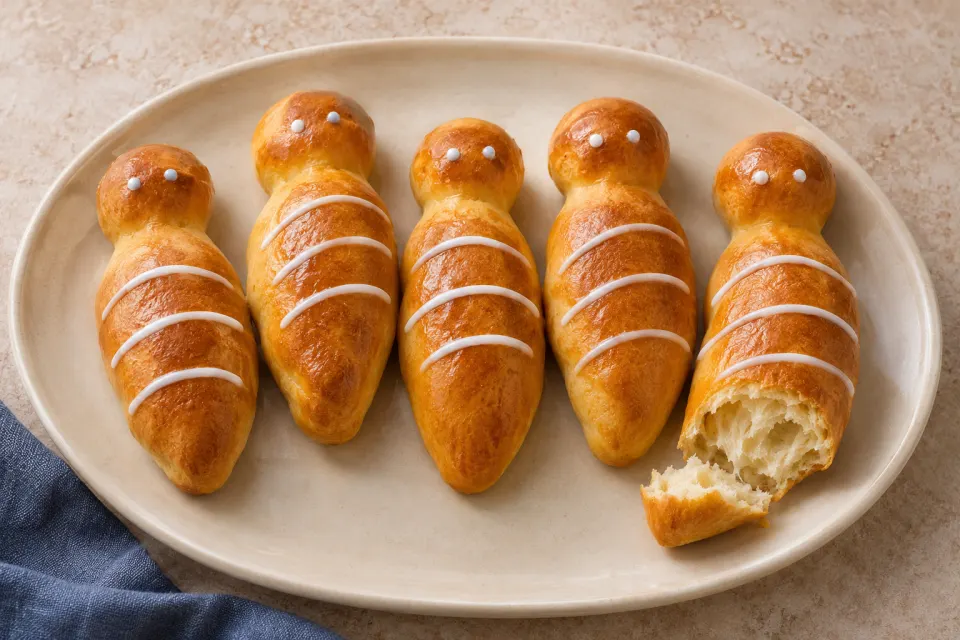
A pair of eyes and a few curved lines can turn an oval of bread into someone you recognize. With guaguas de pan, the shape does much of the storytelling: a small rounded head above a longer body, its decoration suggesting a wrapped bundle. Before you add a single line of icing, the dough needs enough space to rise. What looks neat on the baking sheet will become rounder in the oven.
These Ecuadorian bread figures invite a different sort of baking attention. You are making something to look at, then pull apart and eat. The decoration matters, but so does the bread beneath it. A soft crumb and a properly baked centre deserve as much care as the face.
A bread with a place in the calendar
We are featuring Ecuador during November 1–7, 2026, the week of Día de los Difuntos on November 2. Here the connection is direct: guaguas de pan are a customary companion to colada morada, the purple fruit-and-corn drink associated with the occasion. Ecuadorian food writer Layla Pujol describes that pairing in her recipe and emphasizes that customs differ by place.
This year’s Quito municipal programme gives the tradition a present-day setting. It listed community preparation and sharing of the bread and drink in Llano Grande on November 1, alongside museum demonstrations and activities about memory. The November 2 programme continued the commemoration. Food appears within a wider practice of remembering people who have died, with room for gathering, making and conversation.
That context asks for care with the story. A bread figure does not explain every family’s beliefs. Nor does a collection of competing origin stories establish one reliable beginning. This article stays with documented preparation and contemporary practice, leaving speculative accounts of the shape’s earliest meaning unresolved.
Leave room for the dough
The recipes compared for this bread share an enriched yeast dough, although the proportions and methods differ. Vera Abitbol’s version at 196 flavors uses eggs, butter, cinnamon and vanilla, then decorates the cooled figures with sugar-and-water icing. Those details inform this unfilled home version. The dough is deliberately soft enough to make bread rather than a biscuit that happens to look like a person.
Butter needs time to become part of the dough. Add it gradually after the first mixing, then keep kneading until the mass becomes elastic. Resist fixing every sticky moment with more flour. A brief pause lets the flour absorb moisture; a scraper can move dough that your fingers would otherwise pull apart. Too much extra flour makes shaping easier at the cost of the finished crumb.
The second ingredient to measure generously is time. This recipe uses instant yeast directly in the flour, avoiding a separate sponge, but it still needs two rises. The first develops a light dough; the second restores air after dividing and shaping. A cool kitchen may lengthen both. Follow the changes you can see and feel, using the stated minutes as a planning allowance.
The case for an unfilled bread
Filled guaguas are part of the picture too. In a Primicias interview, baker Oswaldo Vivanco of Rey Pan describes a rich bakery dough with a filling tucked inside the shaped figure. That is one useful comparison, rather than a requirement for every home batch. Here we leave the centre plain so the first attempt can concentrate on kneading, proofing and keeping the head attached.
Shape the head from the same piece as the body. A pinched neck is enough; separate dough balls can pull away as they expand. Keep the body broad rather than drawing out skinny arms and legs. These are bread figures, and a simple silhouette leaves more room for a tender interior. Twelve modest pieces also bake more predictably than a mixture of large and tiny ones.
Before the icing goes on
Let the breads cool completely. Warm crust melts icing into a glaze, losing the lines you have just piped. Begin with a thick mixture and thin it cautiously; a few drops of water can change how it flows. The white decoration here is intentionally simple. Eyes and a small sequence of bands make a legible figure without covering the crust.
This icing contains no raw egg. The dough does, and flour itself is also a raw food: the FDA advises against tasting uncooked dough or using it as children’s play material. Save the shared decorating for the cooled, baked breads, with clean tools and a ready-to-eat icing. Then the creative part can happen around something already cooked.
Make space at the table
Colada morada is the traditional pairing, but making that drink is its own undertaking. These instructions cover the bread alone. If you prepare the pair, give each its own recipe and time; a mention of the drink should not turn into an incomplete set of directions for it.
Pass the bread whole so its shape can be seen before it is broken. There is no need to make every figure identical or treat a slightly crooked face as a failed batch. The important work has already happened in the dough and the oven. After that, the icing offers a little space for individual hands, and the bread offers something to share.
This is a newly researched recipe, separate from the historical cooking archive.