A square worth saving
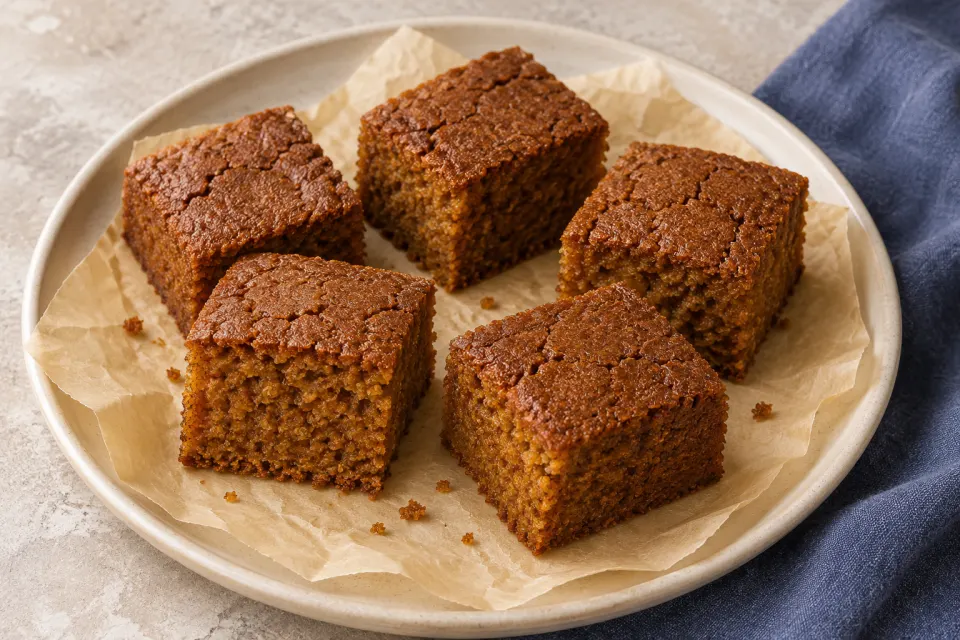
Cut a square from the edge and another from the middle, and parkin gives you two versions of the same cake. There is the firmer baked rim, then the closer, softer crumb inside it. Ginger runs through both. Oatmeal gives the knife something more substantial to travel through than a plain sponge, while dark syrup colours the cut face all the way down.
The most interesting instruction may arrive after the oven has been switched off: leave it alone. Parkin belongs to the small company of cakes whose recipes recommend a little keeping before eating. The wait is an option here, but it is also a useful clue to what this cake is trying to be. It asks for a tin and a later afternoon rather than icing and an immediate entrance.
A Yorkshire cake for this week
November 5, 2026 falls within our November 1–7 editorial week. Britain is today’s country, with Yorkshire’s oatmeal parkin at the centre. Good Food and The Great British Bake Off both connect this ginger cake with Bonfire Night in northern England. This is a researched regional association, rather than a claim that every British household makes the same cake.
The occasion has a specific history. UK Parliament describes November 5 as the annual commemoration of the failed Gunpowder Plot of 1605. Its account also records the anti-Catholic hostility woven into earlier celebrations. That past should not disappear behind a cheerful food story, even when the subject is a cake. Neither does it tell us what each person attending a present-day community event believes.
This year, Visit Bradford lists Bonfire Night events on November 5 and further gatherings through November 7. Those current dates explain why we are turning to Yorkshire this week. They do not establish a menu at any particular display. The cake’s connection comes from the culinary sources; the local programme confirms a living occasion around it.
Keep the oats in view
For this version, seek out dry medium oatmeal: ground oats with some texture left. It is an ingredient to weigh, not a bowl of porridge to spoon into the batter. Mornflake’s parkin recipe specifies medium stoneground oatmeal, and the manufacturer lists it separately from its rolled porridge oats. Check the packet rather than relying on the word oatmeal as it is used in your own kitchen.
The distinction is practical. The selected grain size shapes the crumb, so whole flakes or coarse steel-cut oats are not a casual exchange. The Landmark Trust uses porridge oats in a different, more oat-heavy formula; that shows there are other workable versions, not that all oat products behave identically in this one. Choose the recipe and the ingredient together.
A small comparison of cakes
There is room for considerable variation beneath the name. Sarah Cook’s Good Food recipe leans towards flour, with a smaller amount of oatmeal. The Bake Off version adds mixed spice. The Landmark Trust’s formula reverses the balance towards oats and uses bicarbonate of soda with plain flour. These are consequential differences in structure, not merely alternate decorations.
A family contribution from Beth Goss-Hill in Dementia UK’s recipe book offers another comparison: equal weights of flour and oatmeal, and lard as the fat. Her account identifies a family Bonfire Night custom. It belongs to that contributor, not to an invented memory of our own. Together, the recipes make a useful argument against declaring one ratio the only legitimate parkin.
Our version takes a middle course with medium oatmeal, self-raising flour and butter. Golden syrup supplies part of the sweetness; black treacle supplies a darker counterpoint. They remain two measured ingredients. Replacing the whole quantity with a different syrup would change the result, while blackstrap molasses brings a different intensity from the treacle specified here. Use the named products for the first batch.
Warm the syrup, spare the batter
This is a melt-and-mix cake. There is no creaming stage and no need to build a cloud of whipped butter. The saucepan’s job is simply to combine fat, syrup and sugar, after which a short cooling pause protects the egg from a mixture that is too hot. Keep the heat low and give yourself a bowl large enough to fold the batter without chasing dry flour over its edge.
The modest oven temperature buys the centre time to set. Check the middle rather than deciding from the colour of a dark cake. A skewer carrying liquid batter asks for more baking; a few moist crumbs do not ask you to dry the whole slab out. Let the baked cake cool completely in its tin before wrapping or lifting.
Tomorrow’s tin
The keeping advice appears across the references, though the suggested intervals differ. Here you can taste the fully cooled cake on baking day, or wrap it for a day or two before cutting. The recipe’s headline total covers baking and cooling; that optional later opening of the tin is stated separately. Nobody needs to discover an extra two days halfway through making dessert.
Keep the serving simple. A plain square lets the oat texture and ginger do their work without a frosting layer. Save some from the edge and some from the middle, and see which you prefer after the pause. The calendar has brought us to the cake today. The tin leaves a little of the story for tomorrow.
This is a newly researched recipe, separate from the historical cooking archive.